
Work’s Intimacy: A Book Review

In Work’s Intimacy, Melissa Gregg discusses the rise of technology and its effects on work, personal life, and relationships. She starts out by highlighting Brisbane as the site of this study due to them being a “template for initiatives in creative cities policy development taking place on a global scale” (Gregg, 2011, p. 25). The boom of the city gave way to gentrification and technology as a means of social status. Many advertisements praised the fast-paced lifestyles of individuals working on-the-go.

In Chapter 2, Gregg (2011) speaks mostly on the cons of working from home based on the accounts of interviewees: “Lisa uses email to perform her competence and diligence for those who are still in the office even though she is not, partly to overcome the perceptions others may have of working from home,” (p. 42) “what Richard missed most about the office was the interaction with colleagues (p. 44). Although many pains of remote work are highlighted here, this section closes on a somewhat positive note. Fathers who have the ability to work from home are physically more present in the home, which could potentially alleviate some stress for working mothers.

The next chapter gets into the dilemmas that part-time or contract workers may face. Without the promise of benefits including health insurance, vacation time, sick leave, etc., these workers are under immense pressure to get their work completed within allotted hours. They are left to deal with “excessive workloads that rarely gain appropriate recognition or compensation” (Gregg, 2011, p. 67) Some part-time workers sometimes feel the need to work almost full-time hours to “demonstrate their worth” (Gregg, 2011, p. 68). They believe that this work ethic may showcase their loyalty to the organization, therefore earning them at least some partial benefits. Unfortunately, this is not always the case.

Chapter 4 begins Part II of the book, in which Gregg discusses online culture and social networking. To start, email is perceived as the major tool for teamwork. Workers note feeling the need to be attentive to their inboxes even off the clock to “be appreciated by the team” (Gregg, 2011, p. 77). This used to be a means of quick conversations until workloads became too heavy. With the introduction of social media, workers began to seek out relationships virtually due to the fact that their colleagues were too buried in work to socialize face-to-face.

Facebook arrives on the scene as the platform with which individuals seem to be the most engaged. It “makes us aware of a larger world” (Gregg, 2011, p. 101). This is great news; however, digital literacy becomes a concern for those who are missing out on the opportunities afforded to them through new media. Gregg (2011) highlights the phenomenon of network capital and how “the influence of personal reputation, history and network presence will be vital” in order to measure our value in the workplace (p. 98).

An increase in new media leads to new career opportunities, including titles such as social media manager. Some interviewed in the book felt as though they were crossing an ethical line: “Blurred distractions between public outreach and commercial transactions frustrated Sam’s efforts to take her employer’s intentions in good faith” (Gregg, 2011, p. 114). It became difficult for employees like Sam to realize whether they were truly looking out for their followers’ best interests, or if these efforts were all for profit. Gregg (2011) cites universities as the most common users of this tactic to “capitalize on young people’s assumed preference for online contact” (p. 114).

Chapter 7 elaborates on the idea that technology provides flexibility, especially for parents; however, there are two sides to this concept. One, working from home allows employees to feel as though they are getting ahead of emails so that they can have a less stressful tomorrow. Two, parents – mostly mothers – complete this email sorting while in the presence of their family members, including children. This gives them a sense of being present in the lives of their loved ones, but at the same time, “Middle-class kids become accustomed to white-collar habits from an early age, learning from experience that households are always also workspaces” (Gregg, 2011, p. 136). These habits lead to decreased spontaneous interaction in the household; individual members often become isolated in one room because they each have their own screen to focus on.

In chapter 8, Gregg alludes to the intimacy of work as an escape for women from their family’s demands at home. She also discusses how this separation throughout the day leads to intimate partners following each other’s every move via social media. This immense use of technology to keep up with one another often plays a part in the demise of productive face-to-face time. Since couples are in the presence of each other, they then feel as though they’re missing out on the other non-romantic relationships with which they may be engaged.

To wrap up, Gregg (2011) focuses on “those whose job it is to provide the infrastructure for the practices that have been taken as typical of office workers” – on-call workers (p. 153). These employees do not have the luxury of making plans with their families on the weekends, or being out of range from their phones. There is a constant “sense of urgency and unpredictability,” making it extremely tough for on-call workers to truly disconnect from their work (p. 161).

The biggest takeaway from this book is for all of us to take a step back and analyze our motives for being so connected to work. The conclusion reminds us that loyalty may seem like the way to prove worth and reap rewards; however, although unfortunate, it is possible that these efforts could go unnoticed. Big organizations are always looking out for their overall success and longevity, so it’s best that we start looking out for our own as well – especially taking mental health into account.

*****

 References

Gregg, M. (2011). Work’s intimacy. Malden, MA: Polity Press.
COM 664 Intro

Jumping right into Fall I with Organizational Identity & Brand! In this course, I will learn about the importance of brand identity. The only constant is change, and it’s happening rapidly especially in terms of technology. This has one of the biggest influences on the “how” and “why” of consumers’ everyday decisions. It will be essential for organizations to build their brands with these changes in mind. This is where genuine connection and engagement will come into play. Looking forward to the next several weeks to explore this topic a little more.

TierraJT, The Podcast: Lessons from Build-A-Bear

I enjoyed diving deeper into the Build-A-Bear Pay Your Age event crisis, especially since I remember a few of my friends sharing the promotion on Facebook about a week before it took place. I had never heard anything of it again, so it was eye-opening to see the massive amount of attention this company received following the event.

I will admit that I did find it a little difficult to connect theory to this real world situation; however, after taking a moment to really soak in the content and sociologists we have read about thus far in this course, I was able to get the ball rolling. It was intriguing to see that Robert Putnam’s cycle of social capital was so well displayed through the example I chose. I appreciated the opportunity to complete this project because I see and hear about communication crises all the time, but have never taken a step back to see how leadership at various companies approach crisis response and bounce back from these mishaps.

In terms of media production, I have had an interest in creating a podcast for a while now. I found it empowering to complete trial-and-error programs, until I finally decided on using iMovie (audio only). Here, I was able to play around with theme music and transition sounds to add some character to my podcast. I never figured out how to record my voice via iMovie, so I proceeded to record all voiceovers on my phone in the Voice Memo app, and AirDrop them to my laptop. Once I was done editing, exporting the mp3 and uploading it to SoundCloud was fairly simple.

I would definitely say that I pushed myself to achieve a better result beyond media productions I have completed in previous courses. For the first time, I listened to multiple podcasts including The Friend Zone and Therapy for Black Girls, to get inspiration on the format and layout of my podcast. Since I already love tuning into these podcasts for content, I thought “What better way to plan the template for my own?!”

Along with this, I realized the importance of scripting. In the past, I would write my scripts as if I were writing an academic research paper. For this podcast, although I stuck to the script, when I wrote it, I did my best to incorporate things I might say in conversation with my friends. Hopefully I was able to add a little personality to this one as opposed to others I’ve done.

Let me know what you think! I welcome all feedback.

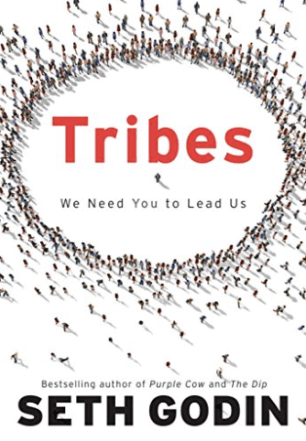
Tribes: A Book Review

TRIBES: WE NEED YOU TO LEAD US
By Seth Godin, 147 pages, $22

Screen Shot 2019-05-21 at 7.36.57 AM

In Tribes, bestselling author Seth Godin essentially describes the importance of building and maintaining an intensely connected inner circle. Contrary to popular belief, and as seen on social media platforms such as Facebook and Instagram, we don’t need thousands of followers to make a real difference in the world. According to Godin, having a small, committed following is key. When a few individuals truly find meaning in your tribe’s message and purpose, they are more likely to genuinely promote positivity in regards to you and your cause. We are much more likely to give something/someone a shot if we hear good things from a trusted source, or sponsor.

This message resonated with me (and I believe it could with others as well) because the generation we live in today is obsessed with aesthetics and likes. It was refreshing to read about the importance of a real social network. We may have all gotten swept away in the ease of “connecting” with each other digitally, but it has really altered the way that we communicate. Godin reminds us that relationships matter and are still the bottom line for success. Social media can be a productive tool for tribes to emerge and prosper with proper leadership who is guiding utilization.

Moving into another theme of Tribes, leaders should “Lean in, back off, but don’t do nothing” (Godin, 2008, p. 59). Sounds complex, right? If you think back to the previous thought that the method with which leaders decide to guide their tribe has a massive effect on the impact of a mission. Leaders should certainly be passionate about their own message, and lean into that; however, it is equally important to be able to stand back and let your tribe communicate their ideas. Innovators can be found within tribes regardless of the fact that they were not the individual responsible for the overarching function of the tribe. Give others a chance to shine!

Some may be disappointed to find that this book is not necessarily a step-by-step for “How to Be a Great Leader,” but more of a broad description of what happens when leadership goes right. There are many examples of successful individuals whom we may have never considered leaders according to the status quo, including a violinist, a writer, an animal rights activist, and even more. Godin stresses that there is no blueprint to being a successful leader; if that were the case, everyone would be doing it.

An overall, but subtle key takeaway from Tribes is that rules were meant to be broken. It was intriguing to read about leaders who were not the status quo that we usually have in mind when we think of innovators. For instance, the example that stood out to me the most was about the creator of a sandwich with which we are all very familiar:

In 1967, just outside of Pittsburgh, a third-tier McDonald’s franchisee named Jim Delligatti broke the rules and invented a new sandwich. Within a year, the Big Mac was on the menu of McDonald’s restaurants around the world. (They even service a meatless version in India.)

(Godin, 2008, p. 74)

I enjoyed this read because of the wide array of life instances Godin’s messages could apply to. Sure, we may immediately and instinctively relate something like this to our 9-5 work lives (which I caught myself doing numerous times). We should definitely adopt this way of thinking in the workplace and not be sheepwalkers, accepting things as they are. Godin (2008) thinks to himself, “Isn’t it sad that we have a job where we spend two weeks avoiding the stuff we have to do fifty weeks a year” (p. 100)? In the same token, we must not take life outside of work as it is either, so let’s get to work!

*****

Godin, S. (2008). Tribes: We need you to lead us. New York: Portfolio.

Harris, C. (2018). How to find the person who can help you get ahead at work [TED Talk]. Retrieved from https://www.ted.com/talks/carla_harris_how_to_find_the_person_who_can_help_you_get_ahead_at_work?language=en

3 Ways to Integrate Creativity & Innovation into Your Organizational Culture

In this time of rapid industry growth, it is important for you as an employer to tend to the needs of your employees. Adding a few simple initiatives can improve organizational culture, further the overall vision and mission, and retain happy, openminded employees.

Here are three ways to integrate creativity and innovation into your organizational culture:

Acknowledge impact | As children, we knew that we were excelling in our classwork when we received our report cards. The same can be true in the workplace, especially when taking a look at Peter Senge’s concept of learning organization. Particularly in regards to a shared vision, “members act in concert because they share a common organizational vision and understand how their own work helps build on that shared vision” (Eisenberg, Tretheway, LeGreco, & Goodall, 2017, p. 111). Build company morale by showing employees how their collective efforts impact your organization’s mission. For instance, if satisfactory healthcare is at the heart of your goals, let your employees know about any positive feedback you receive from consumers. This will make them feel a sense of purpose, and strive to go above and beyond.

Encourage breaks | Make sure your employees know that you are supportive of them taking breaks. After all, a relaxed brain allows for increase productivity and innovation. “For example, researchers have shown that watching a funny eight minute video (Cheng & Wang, 2015) or spending less than one minute looking at nature (Lee et al., 2015) improves employee performance after they return to the work task” (Grippo, 2017). Taking a moment to disconnect from one’s responsibilities opens doors to new possibilities upon returning to work. When employees leave for the December/January holidays and come back to work, they feel refreshed. Think of these breaks as mini-vacations for them.

Improve outcomes | Most businesses have specific processes that they utilize to achieve company goals. It is important for you and your employees to take a collaborative approach and evaluate the efficiency of these tools at regular intervals. Are they truly getting the job done? Are you measuring the correct indicators to determine the success of these processes? How can your processes be improved? It may be helpful to implement a continuous service improvement framework similar to that of the Information Technology Infrastructure Library (ITIL), which is used to manage service delivery. Although this framework is specific to the information technology industry, others can learn from it. “The benefits of ITIL include reduced cost of service development and deployment, improved customer satisfaction with service delivery, increased productivity from IT personnel, quality improvements, better management metrics of services and increased flexibility in adapting services to changing business requirements” (Tittel & Follis, 2019). Involving your employees in the assessment of your organizational processes and steps for refinement can create efficiencies within the company.


Cheng, D., & Wang, L. (2015). Examining the energizing effects of humor: The influence of humor on persistence behavior. Journal of Business and Psychology, 30(4), 759-772.

Eisenberg, E.M., Tretheway, A., LeGreco, M., & Goodall, H.L., Jr. (2017). Organizational communication: Balancing creativity and constraint. (8th ed.). Boston, MA: Bedford/St. Martin’s.

Grippo, A. (2017). Why and How You Should Take Breaks at Work [Psychology Today]. Retrieved from https://www.psychologytoday.com/us/blog/the-wide-wide-world-psychology/201704/why-and-how-you-should-take-breaks-work

Lee, K.E., Williams, K.J.H., Sargent, L.D., Williams, N.J.G., & Johnson, K.A. (2015). 40-second green roof views sustain attention: The role of micro-breaks in attention restoration. Journal of Environmental Psychology, 42, 182-189.

Tittel, E. & Follis, E. (2019). ITIL Certification Guide: Overview and Career Paths [Business News Daily]. Retrieved from https://www.businessnewsdaily.com/10696-itil-certification-guide.html

Public Displays of Gratitude

Introduction

     In today’s work environment, employee engagement has become an important focus. A few initiatives that may come to mind include after work socials, pet friendly offices, onsite health screenings, and even annual retreats. These activities can boost communication, foster interpersonal relationships, and show that a company is truly appreciative of their employees. According to DeSteno (2017), “Making people feel proud — not arrogant, but proud of the skills they have — makes them more willing to wait for future rewards and more willing to take on leadership roles in groups and work longer and harder to help a team solve a difficult problem.” Overall, if employees feel appreciated and proud of where they work, they tend to be more loyal, and dedicated to their job duties which can greatly benefit an organization.

Leaders must begin to implement new, innovative strategies to retain employees who are committed to the overall vision and success of the organization. “Success in this digital economy may take a new level of engagement, reconnecting at a very human level and paying attention to the real conversation behind every interaction” (Grove 2019). Appealing to human emotion is an important key to employee engagement, which is essential during this evolution of technology. Of course, many employees are constantly emailing, or using an array of tools to communicate with one another virtually; however, there is always the need for physical and face-to-face interactions. These circumstances should definitely be considered when discussion takes place within organizations regarding methods to improve retention rates.

Rationale

     Organizations who do not take employee engagement seriously run the risk of suffering a myriad of consequences including poor communication, unmotivated employees, and low retention rates. According to Merhar (2016), “Frequent voluntary turnover has a negative impact on employee morale, productivity, and company revenue. Recruiting and training a new employee requires staff time and money.” Employees who do not feel connected to each other or the company’s vision, can contribute to inefficiency while they are still employed, and even after they decide to leave. The cost to hire a new, motivated worker could certainly result in time lost having to complete the rigorous onboarding process. Implementing employee engagement opportunities early on has the potential to save a company time and money.

Therefore, I will be conducting a content textual analysis of the digital Gratitude Board at MUSC’s Center for Telehealth to illustrate a new approach that the organization has taken to address employee engagement. “Content analysis is valuable in organizational research because it allows researchers to recover and examine the nuances of organizational behaviors, stakeholder perceptions, and societal trends” (University of Georgia, 2012). Analyzing the content within the Gratitude Board will allow me uncover the efforts of this organization, and get a better understanding of the aspects of employee engagement they suggest are important through these posts. I will be using the social learning theory to illuminate how this strategy could prove effective in regards to keeping employees engaged with their work, and each other.

THEORETICAL FRAMEWORK & METHODOLOGY


DeSteno, D. (2017). The only way to keep your resolutions [The New York Times Opinion]. Retrieved from https://www.nytimes.com/2017/12/29/opinion/sunday/the-only-way-to-keep-your-resolutions.html

Grove, T. (2019). Engagement in a new era of business: An invitation to communicate differently [Forbes CommunityVoice]. Retrieved from https://www.forbes.com/sites/forbescoachescouncil/2019/02/01/engagement-in-a-new-era-of-business-an-invitation-to-communicate-differently/#70f4d10f62eb

Merhar, C. (2016). Employee retention – The real cost of losing an employee [PeopleKeep blog]. Retrieved from https://www.peoplekeep.com/blog/bid/312123/employee-retention-the-real-cost-of-losing-an-employee

University of Georgia Research & Methodology [Web page]. (2012). Retrieved January 28, 2019 from https://www.terry.uga.edu/management/contentanalysis/research/

Classic Management

Dating back to the eighteenth century, classical management was the approach of choice for most businesses. What comes to mind to best illustrate this concept is Henry Ford’s assembly line. Although this method was adopted in the 1900s, there was still an overarching theme that if processes were established, productivity would increase. In this example, Ford’s Model T could take almost half a day to assemble! With the introduction of dividing labor, and training groups of employees to build specific parts of the car. This way, employees’ focus could remain on their one assigned contribution for each car manufactured. After Ford applied this approach, the time to assemble a Model T was down to just a couple hours!

Classic management does have some benefits with the most apparent being efficiency; however, the approach does not allow for creativity and engagement from employees who are not at a high-up management level. I believe that there must be a back and forth between employees and their leaders to implement some of the most innovative protocols. Who else knows the ins and outs of a process better than the employees who are performing the major tasks daily? Why not give them a chance to voice their opinions on what’s working, and what’s not?

This classic model of management can be seen today in companies that have call centers, such as BlueCross BlueShield. The big-wigs make all of the decisions regarding insurance policies. Their rules are trickled down into these call centers, and employees answering the phones must do what they are being told by upper management. There is a division of labor in that different departments of the call center answer calls from specific callers: members who have insurance through their employers, employers, providers, etc. They are all trained separately on the types of questions that would come in for their specific focus. In this setting, there is no real room for employees to step up and suggest their ideas for improvement. They are stuck doing mindless work (not completely mindless, as insurance is very complex, but in a routine sense).

While I do agree that a division of labor is necessary in terms of various skills and experience, I think that employees should feel empowered to offer input on company strategies and goals. Internal collaboration is a major key for companies to be successful, and retain employees. If individuals feel replaceable, like anyone can be trained to do their job, they will go elsewhere to find a position/organization that is more fulfilling and allow them to contribute in an innovative manner.