
TRIBES: WE NEED YOU TO LEAD US
By Seth Godin, 147 pages, $22
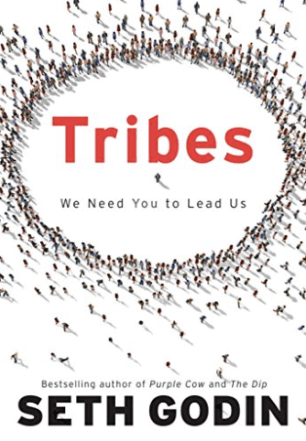
In Tribes, bestselling author Seth Godin essentially describes the importance of building and maintaining an intensely connected inner circle. Contrary to popular belief, and as seen on social media platforms such as Facebook and Instagram, we don’t need thousands of followers to make a real difference in the world. According to Godin, having a small, committed following is key. When a few individuals truly find meaning in your tribe’s message and purpose, they are more likely to genuinely promote positivity in regards to you and your cause. We are much more likely to give something/someone a shot if we hear good things from a trusted source, or sponsor.
This message resonated with me (and I believe it could with others as well) because the generation we live in today is obsessed with aesthetics and likes. It was refreshing to read about the importance of a real social network. We may have all gotten swept away in the ease of “connecting” with each other digitally, but it has really altered the way that we communicate. Godin reminds us that relationships matter and are still the bottom line for success. Social media can be a productive tool for tribes to emerge and prosper with proper leadership who is guiding utilization.
Moving into another theme of Tribes, leaders should “Lean in, back off, but don’t do nothing” (Godin, 2008, p. 59). Sounds complex, right? If you think back to the previous thought that the method with which leaders decide to guide their tribe has a massive effect on the impact of a mission. Leaders should certainly be passionate about their own message, and lean into that; however, it is equally important to be able to stand back and let your tribe communicate their ideas. Innovators can be found within tribes regardless of the fact that they were not the individual responsible for the overarching function of the tribe. Give others a chance to shine!
Some may be disappointed to find that this book is not necessarily a step-by-step for “How to Be a Great Leader,” but more of a broad description of what happens when leadership goes right. There are many examples of successful individuals whom we may have never considered leaders according to the status quo, including a violinist, a writer, an animal rights activist, and even more. Godin stresses that there is no blueprint to being a successful leader; if that were the case, everyone would be doing it.
An overall, but subtle key takeaway from Tribes is that rules were meant to be broken. It was intriguing to read about leaders who were not the status quo that we usually have in mind when we think of innovators. For instance, the example that stood out to me the most was about the creator of a sandwich with which we are all very familiar:
In 1967, just outside of Pittsburgh, a third-tier McDonald’s franchisee named Jim Delligatti broke the rules and invented a new sandwich. Within a year, the Big Mac was on the menu of McDonald’s restaurants around the world. (They even service a meatless version in India.)
(Godin, 2008, p. 74)
I enjoyed this read because of the wide array of life instances Godin’s messages could apply to. Sure, we may immediately and instinctively relate something like this to our 9-5 work lives (which I caught myself doing numerous times). We should definitely adopt this way of thinking in the workplace and not be sheepwalkers, accepting things as they are. Godin (2008) thinks to himself, “Isn’t it sad that we have a job where we spend two weeks avoiding the stuff we have to do fifty weeks a year” (p. 100)? In the same token, we must not take life outside of work as it is either, so let’s get to work!
*****
Godin, S. (2008). Tribes: We need you to lead us. New York: Portfolio.
Harris, C. (2018). How to find the person who can help you get ahead at work [TED Talk]. Retrieved from https://www.ted.com/talks/carla_harris_how_to_find_the_person_who_can_help_you_get_ahead_at_work?language=en
 Tierra Thomas